Explore how Deep Learning and Convolutional Neural Networks (CNNs)
can analyze images and detect whether they are real or generated by AI. Learn how neural networks
learn patterns and features to make accurate predictions.
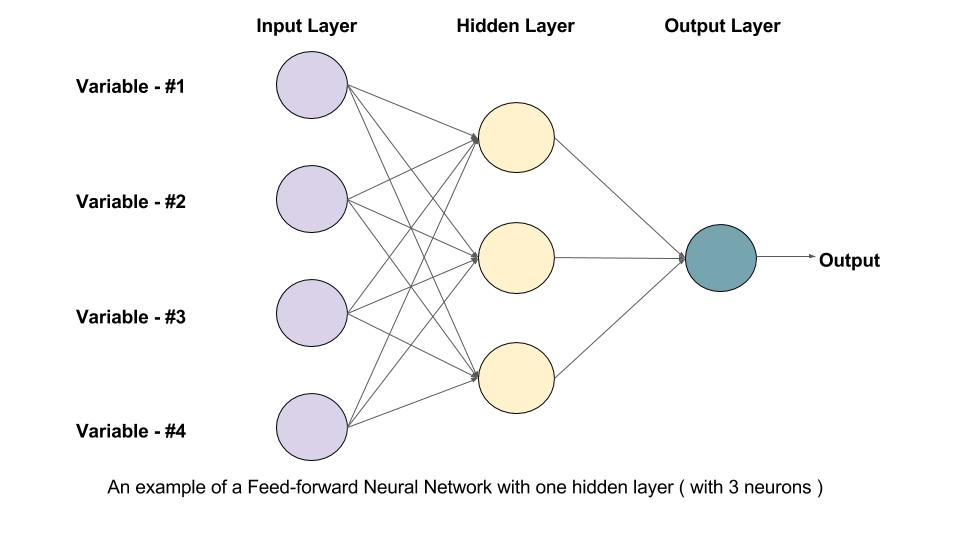
Deep Learning and Neural Networks
A neural network consists of layers of interconnected nodes, or neurons. Each neuron has weights
that adjust during training. The network learns to map inputs (images) to outputs (predictions)
using forward propagation to compute predictions, and backpropagation
to adjust weights based on the gradient of the loss function. This iterative
process allows the network to recognize complex patterns in the data.
Convolutional Layers (CNNs)
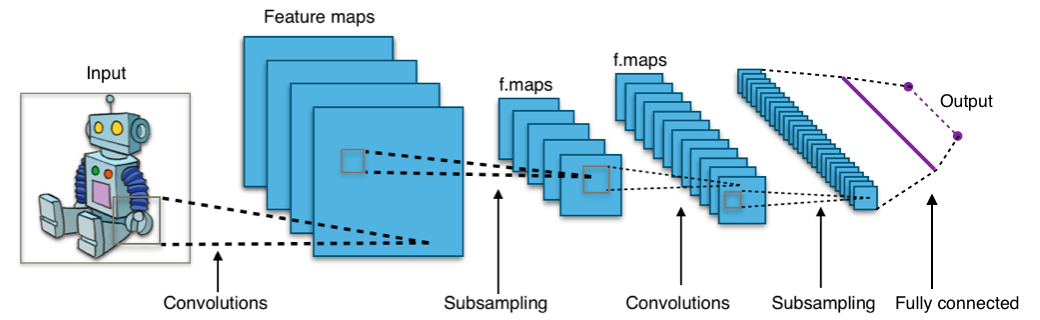
Convolutional Neural Networks are specialized for image analysis. Instead of connecting every pixel
to each neuron, CNNs use convolutional layers with small filters that scan the image.
These filters detect features such as edges, textures, and patterns.
Pooling layers reduce spatial size while retaining important information. Finally,
fully connected layers combine features to make the final prediction.
Why CNNs Are Powerful
CNNs automatically learn hierarchical features: simple patterns in early layers (like edges)
and complex structures in deeper layers. By updating weights through backpropagation, CNNs
can achieve high accuracy on image recognition tasks and adapt to diverse datasets.